
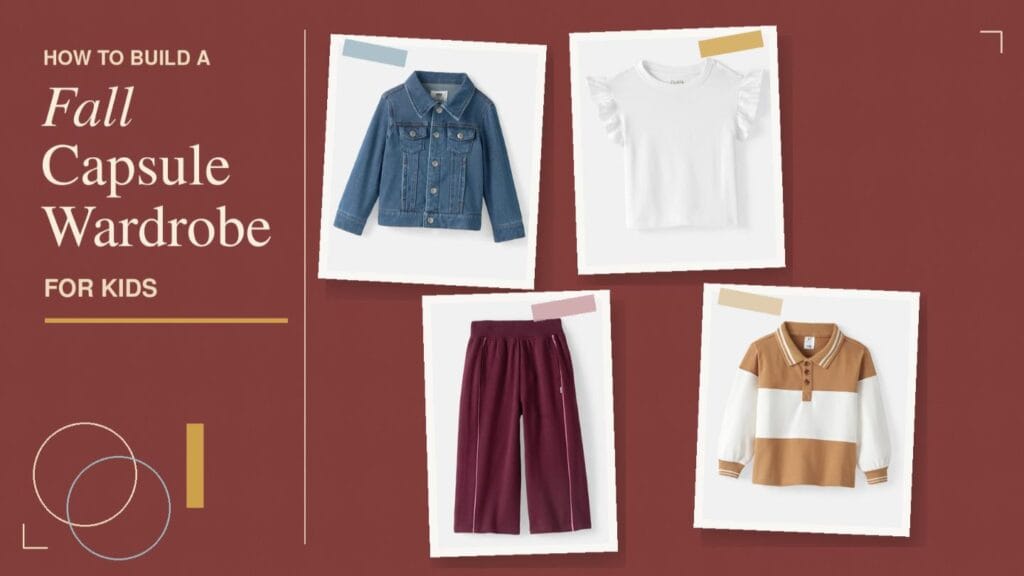

Fall has a way of making kids’ closets feel especially chaotic. The morning starts at 48 degrees, recess happens at 70, and the sweatshirt you packed somehow never makes it home. Add a recent growth spurt, a child with strong opinions about waistbands, and a laundry basket that is never quite empty, and getting dressed becomes its own daily project.
A fall capsule wardrobe helps by creating a smaller collection of clothes that work together. The goal is not to build a perfectly color-coordinated closet or limit your child to beige basics. It is to have enough comfortable, dependable pieces that most tops work with most bottoms and layers can be added or removed without rethinking the entire outfit.
Start With a Closet Audit, Not a Shopping Cart
Before buying anything, have your child try on the clothes that have carried over from spring. Check sleeve length, waistbands, hems, and whether jackets still zip comfortably over another layer.
Sort everything into four groups:
- Fits and will be worn
- Fits but needs a coordinating piece
- Too small or uncomfortable
- Special-occasion clothing that does not belong in the everyday rotation
Be honest about what your child actually wears. A beautiful sweater that has been rejected six times because it feels itchy is not a capsule wardrobe staple. Neither are stiff jeans for a child who spends most of the day sitting on the classroom rug or climbing at the playground.
This quick audit also prevents duplicate shopping. You may discover that your child already has five usable tops but no pants that fit, or several hoodies but nothing lightweight enough to wear underneath them.
Build Around Your Family’s Laundry Schedule
There is no universal number of pieces every child needs. A family that washes clothes every other day can work with a much smaller wardrobe than one that does laundry once a week. Preschoolers who come home covered in paint, snack crumbs, and playground dirt may also need more backups than older children.
For a child who needs roughly one week of outfits between laundry days, a practical starting point is:
- 5 to 7 everyday tops
- 4 to 6 bottoms
- 2 lightweight sweaters, sweatshirts, or hoodies
- 1 everyday jacket
- 1 weather-specific layer, if needed for your climate
- 1 or 2 dresses, overalls, or other one-piece outfits
- 3 to 5 pairs of pajamas
- Enough socks and underwear to cover the week plus a few extras
Treat this as a starting point, not a shopping checklist. If your child already has three sweatshirts they love, there is no reason to buy more simply to complete a formula.
Choose a Flexible Color Palette
A capsule wardrobe works best when the colors cooperate, but that does not mean every piece needs to be neutral. Start with two base colors that are easy to repeat, such as navy, charcoal, cream, denim, olive, or chocolate brown. Then let your child choose two or three colors and prints they genuinely enjoy.
Fall 2026 color trends are noticeably brighter than the traditional rust-and-pumpkin palette. Burgundy, moss green, tomato red, butter yellow, plum, and saturated blue can all make a kids’ wardrobe feel current without becoming difficult to coordinate.
The easiest approach is to use bolder colors and prints on tops, where they can be paired with several simple bottoms. If your child loves dinosaurs, florals, trucks, sports, or character designs, choose one or two favorite prints and pull the rest of the capsule’s colors from them.
A useful test is to ask whether every top works with at least three bottoms and every bottom works with at least four tops. If a piece only works in one very specific outfit, it may not earn its place in the capsule.
Use a Repeatable Fall Outfit Formula
Instead of planning individual outfits, build around a simple formula:
Base layer + comfortable bottom + removable mid-layer + weather-ready outer layer
That might look like:
- A short-sleeve tee, joggers, and a zip-up hoodie
- A long-sleeve top, leggings, and a lightweight jacket
- A dress, leggings, and a cardigan
- A graphic tee, flexible pants, and a sweatshirt
- Overalls, a fitted tee, and a windbreaker
The formula makes it easier to adjust an outfit without starting over. A child can remove the sweatshirt when the classroom warms up or add the jacket before an evening soccer practice.
It also helps kids become more independent. Once they understand that they need one piece from each category, they can put together their own outfits without creating combinations that only work for one temperature.
Make Lightweight Layers Do the Work
The most useful fall clothes are rarely the heaviest ones. Lightweight pieces give children more control as temperatures change throughout the day and are easier to store in a backpack, cubby, or locker.
For soft everyday layers, Little Sleepies is a top brand to consider. Its Play collection includes relaxed tees, leggings, joggers, dresses, sweatshirts, sweaters, and jackets designed for mixing and matching. Bamboo children’s clothing can work particularly well as a comfortable base layer because the fabric is soft, breathable, and easy to wear under a sweatshirt or jacket without adding too much bulk.
This can be especially helpful for children who are sensitive to stiff fabrics, scratchy seams, or bulky layers. A soft top that feels comfortable against the skin is more likely to stay on all day, which is ultimately more useful than a heavier piece your child constantly tries to remove.
When choosing middle layers, look for sweatshirts, cardigans, and hoodies that are easy for your child to manage independently. Zippers, roomy neck openings, and simple closures can make a big difference during school transitions.
Keep Some Short Sleeves in the Rotation
It may be tempting to pack away every summer shirt as soon as September arrives, but short-sleeve tees are some of the most useful fall base layers. They can be worn alone during a warm afternoon or layered under a sweatshirt without making kids feel overheated.
A balanced fall capsule might include two or three short-sleeve tees and three or four long-sleeve tops. Families in warmer climates may want to reverse that ratio, while those in colder areas may need more long sleeves.
The point is to build for the weather your family actually experiences, not the version of fall shown in seasonal catalogs.
Pick Bottoms for Real-Life Movement
For most kids, bottoms need to survive classroom floors, recess, playground adventures, spills, and repeated washing. Flexible waistbands and fabrics that allow movement are usually more practical than stiff or highly structured styles.
A useful mix might include:
- Two pairs of leggings or joggers
- One pair of durable everyday pants
- One pair of jeans or structured pants, if your child wears them
- One slightly dressier option
- One backup pair for school or the car
You do not need every type. If your child refuses jeans, build around joggers, leggings, or pull-on pants instead of buying denim that will remain untouched. A capsule only works when the clothes make it onto the child.
Dark neutrals, small prints, and heathered fabrics can also be forgiving when dealing with real-life stains. Save lighter colors for pieces that are easy to wash or less likely to be worn during art class.
Include One Trend Piece Your Child Loves
A capsule wardrobe should simplify the closet without removing all personality. Give your child room to choose one or two pieces that feel exciting, even if they are not the most neutral or practical items in the drawer.
For fall 2026, that could be a colorful windbreaker, a varsity-inspired sweatshirt, a relaxed graphic tee, striped track pants, or a sweater in plum, bright red, or moss green. A trend piece feels much more wearable when the rest of the wardrobe is built from simple, coordinating staples.
This is also an easy way to get kids invested in the process. Instead of asking an open-ended question like, “What clothes do you want?” offer a few parent-approved options and let them choose their favorite.
Keep Dresses and One-Piece Outfits Practical
Dresses, overalls, and rompers can absolutely fit into a capsule wardrobe. In fact, one-piece outfits often make busy mornings easier because there are fewer pieces to coordinate.
Choose styles that can be adapted as temperatures change. A short-sleeve dress can work with leggings and a cardigan, while overalls can be layered over short- or long-sleeve tops. The best options are comfortable enough for school and play, not reserved for an occasion that may never make it onto the calendar.
If your child loves dresses, include them. If dresses lead to daily negotiations, skip them. A capsule wardrobe should reflect the child you are dressing, not an imaginary child with different preferences.
Choose Outerwear Based on the Routine
Most children do not need five fall jackets. One dependable everyday layer and one weather-specific option are usually enough.
Think about where your child spends the day. A child who walks to school may need a water-resistant jacket with a hood. A preschooler who moves directly from the house to the car may get more use from a soft zip-up layer. Kids who spend afternoons at the playground or outdoor practices need something that allows plenty of movement.
Before buying, make sure the jacket fits comfortably over a sweatshirt without restricting the shoulders. Avoid sizing up so much that sleeves cover the hands or the garment becomes difficult to manage.
Also consider whether the jacket is easy to wash, has usable pockets, and can be zipped or snapped without adult help. Those small details matter far more than whether the jacket looks perfect on a hanger.
Plan for Growth Without Buying Everything Too Big
Children grow quickly, but buying every piece several sizes too large can make a capsule less functional. Oversized pants may drag, sleeves can interfere with handwashing and play, and bulky layers may be uncomfortable in a car seat or classroom chair.
Choose base layers in the child’s current size, then look for flexible features that offer a little extra wear:
- Adjustable waistbands
- Stretchy fabrics
- Foldable cuffs
- Longer hems
- Relaxed tops that still fit through the shoulders
- Jackets with enough room for one additional layer
Try to avoid buying an entire fall wardrobe at once for a child who is between sizes. Purchase the immediate essentials first, then fill remaining needs once you see how the new size fits across different brands and styles.
Make the Capsule Easy for Kids to Use
A beautifully organized capsule does not help much if your child cannot find anything. Group clothing by type so tops, bottoms, and layers are easy to see. For younger kids, keep a few complete outfit combinations together or take photos of outfits they can recreate.
You can also create three simple drawer or closet zones:
- Tops
- Bottoms
- Layers
This gives children some independence while keeping their choices manageable. If the colors already coordinate, nearly any combination they choose should work.
Keep one backup outfit at school and another in the car if your child is especially spill-prone. Use pieces from the same capsule so the backup can be worn without looking or feeling like an emergency outfit.
Test the Capsule Before Buying More
Once the core wardrobe is assembled, use it for a week or two before adding anything else. Pay attention to what remains in the drawer and what is constantly in the wash.
If every pair of pants is dirty by Wednesday, you may need another bottom. If two sweaters are never worn, adding a third will not solve the problem. The first few weeks of fall will reveal more about your family’s real needs than any standard capsule checklist.
It may also show you that your child needs something you did not expect, such as an extra hoodie to leave at school, a pair of rain boots, or more short sleeves because afternoons remain warm.
A Better Fall Closet With Fewer Morning Decisions
A useful fall capsule wardrobe is not defined by an exact number of pieces or a perfectly curated color palette. It is a closet filled with clothes your child likes, can move in, and can combine without much help.
Start with what already fits. Build around your laundry schedule and local weather. Use soft base layers, flexible bottoms, and removable outer layers to handle changing temperatures. Then leave room for the bright color, playful print, or favorite sweatshirt that makes the wardrobe feel like it belongs to your child.
The result should not look overly styled. It should make school mornings faster, reduce unworn clothing, and give your child enough comfortable options for everything fall brings.