

A tourbillon is the most prestigious complication in mechanical watchmaking. Invented in 1801 to counteract gravity’s effect on pocket watch accuracy, the spinning cage mechanism has become shorthand for five- and six-figure luxury—the horological equivalent of a Michelin star. At Patek Philippe, a tourbillon starts around $150,000. At Breguet, the house that invented it, the entry point is north of $100,000.
Then there is Tufina, a family-owned German brand founded in 1828, selling hand-assembled tourbillons for under $3,000.
That is not a misprint. And for anyone who studies how luxury goods are actually priced—versus what they cost to produce—the gap between Tufina and its Swiss competitors tells a story less about quality and more about business models.
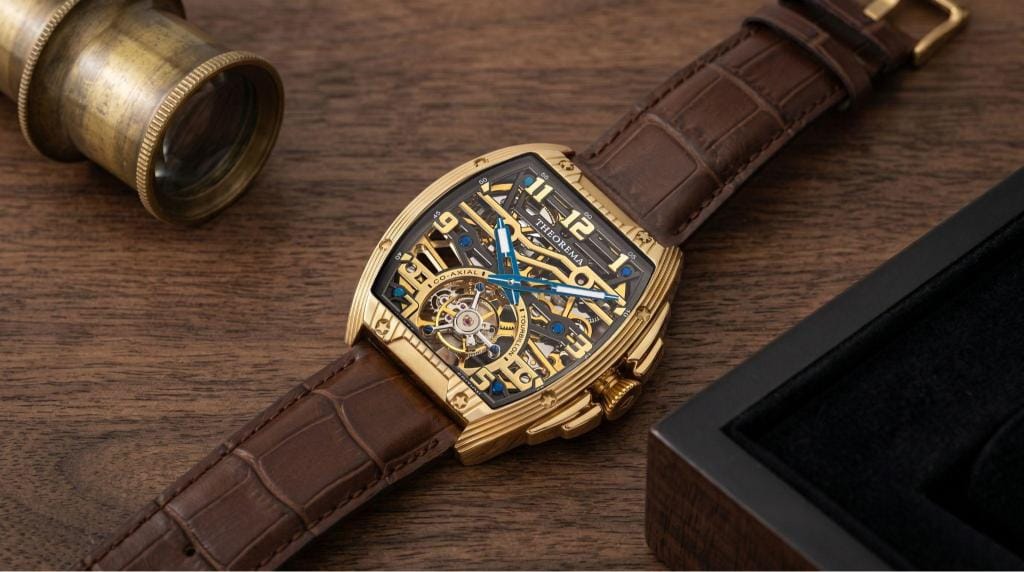
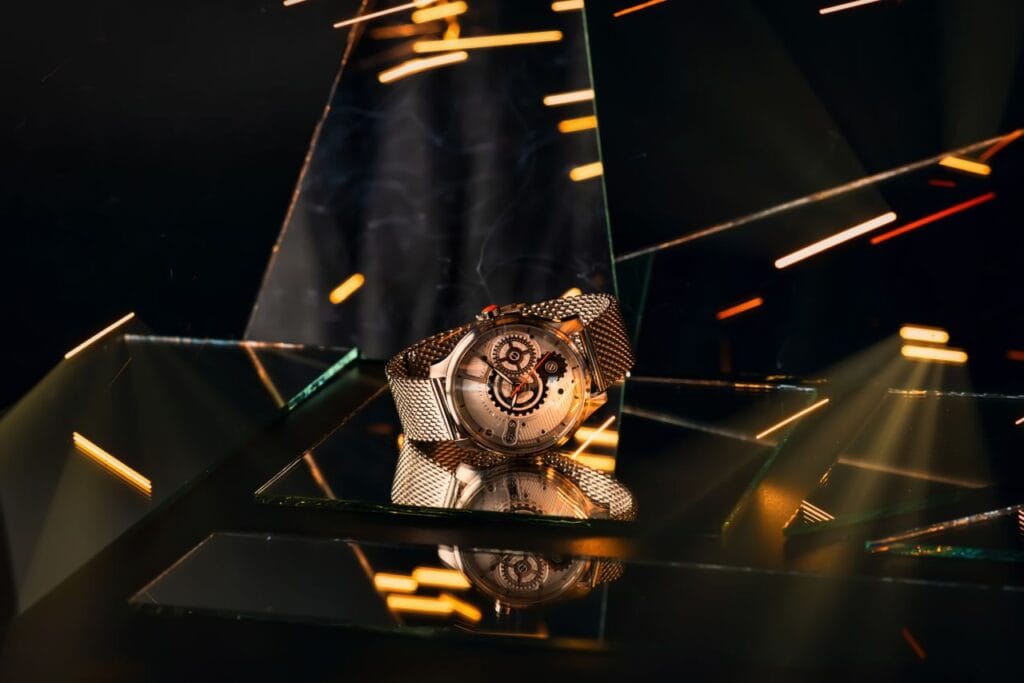
Tufina Theorema St. Moritz GM-907-4 – Limited Edition 28800 VPH Tourbillon.
The Middleman Problem
The traditional luxury watch supply chain is expensive by design. A Swiss manufacturer builds a movement, finishes it to spec, then sells it to a brand. The brand cases it, markets it, and ships it to an authorized dealer who pays wholesale and marks it up 40 to 100 percent at retail. By the time a tourbillon reaches a customer’s wrist at a boutique on Madison Avenue or the Place Vendôme, its price has been multiplied several times over—not by additional craftsmanship, but by real estate, staffing, and brand positioning.
Tufina skips all of that. The company designs, assembles, and sells directly through its own e-commerce platform. No authorized dealers. No retail markup. No wholesale layer. The watches move from the Munich workshop to the customer’s door.
“Our family has been in watchmaking for almost 200 years,” says Enis Tufina, who heads the company’s eighth generation. “Hard work is not something we implemented. It’s something we inherited.”
What $3,000 Actually Buys
Skeptics will ask the obvious question: is a $3,000 tourbillon actually good? The short answer is that the complication itself—the rotating cage, the escapement, the balance wheel—operates on the same mechanical principles regardless of price. Tufina’s Zürich and Bern collections run at 28,800 vibrations per hour, feature sapphire crystal on both sides, and are individually tested on an electronic timegrapher before shipping. For a detailed look at the engineering involved, Tufina’s breakdown of what makes tourbillons worth the investment walks through the micron-level precision required to build one.
The skeleton dials are not cosmetic shortcuts—they are a deliberate design choice that puts the tourbillon cage on full display, turning the watch face into a window onto the movement. Limited production runs keep quality control tight, and each piece ships in a handcrafted wooden box with a two-year warranty.
What you will not get is the social currency of a name that non-watch people recognize instantly. That trade-off is the entire point.
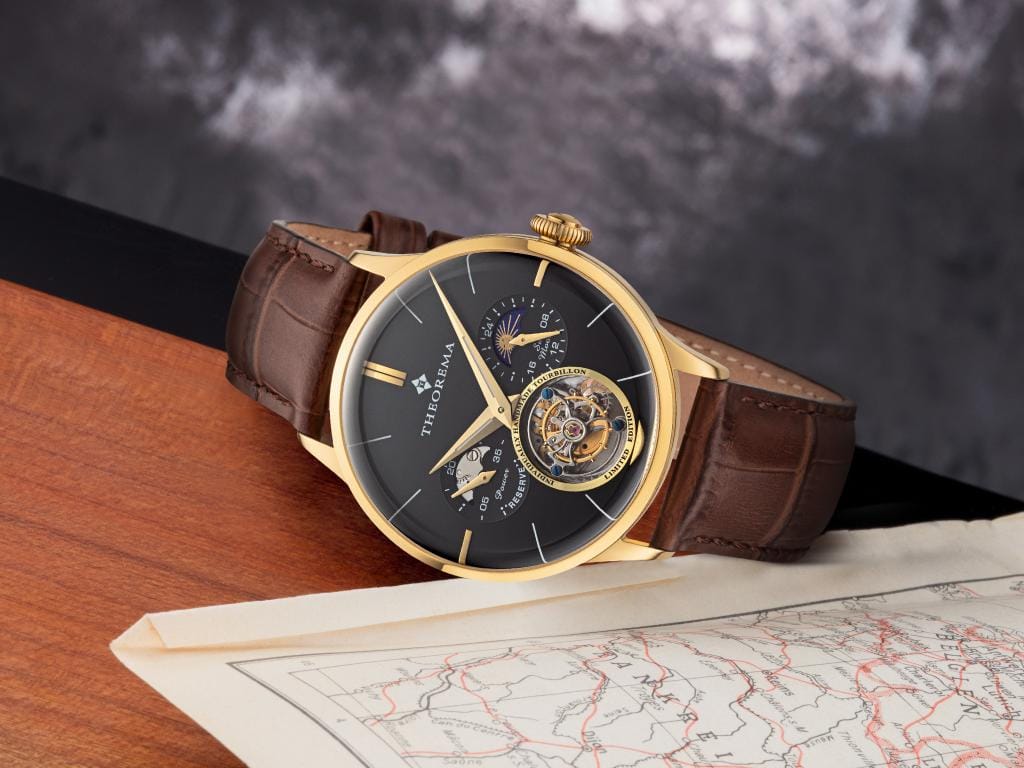
Tufina Theorema Bern Tourbillon GM-906-4 – Limited Edition Co-Axial Tourbillon.
A Familiar Playbook
Tufina’s model mirrors a disruption that has already swept through other luxury categories. Warby Parker proved that quality eyewear did not require a $500 retail price. Away did the same with luggage. The pattern is consistent: strip out legacy distribution costs, sell direct, and deliver a comparable product at a fraction of the incumbent’s price.
The watch industry has been slower to follow. Part of the reason is cultural—horology is deeply traditional, and prestige pricing is baked into the collector psyche. Part of it is mechanical complexity—a tourbillon genuinely is harder to build than a pair of glasses. But the DTC math still works, and Tufina is proving it.
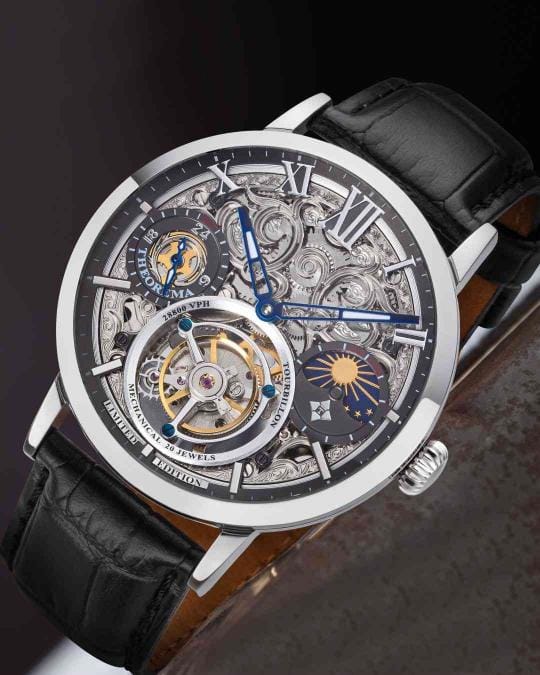
Tufina Theorema Zurich Tourbillon GM-901-1 – Multi-function Tourbillon.
Who Is Buying
The customer profile is telling. According to the company, the majority of tourbillon buyers are first-time mechanical watch owners—professionals in their late twenties to early forties who appreciate engineering but were never going to spend five figures on a watch.
“We hear from people who say the Zürich tourbillon is the first mechanical watch they have ever owned,” Tufina says. “That is not a customer the traditional Swiss houses are even trying to reach. We think that is a mistake.”
Whether the Swiss brands agree or not, the market is shifting. The global luxury watch industry continues to rebound post-pandemic, but the growth is concentrated at two ends: ultra-high-end collectibles and accessible, value-driven mechanicals. The middle—$5,000 to $15,000 watches from brands without deep heritage—is getting squeezed.
A two-century-old watchmaker selling tourbillons direct to consumer for under $3,000 sits on the right side of that trend. And for anyone who has studied how DTC disruption unfolds, this is the part of the story where the incumbents should start paying attention.