

Backyard bird watching is no longer a hobby just for the elderly with binoculars and field guides. It’s one of the most popular family, professional, and nature-attuned at-home wellness trends in 2026. With people’s lifestyles changing after the pandemic, increasing stress, and the growing trend of smart home technology, there has never been a better time to create a serene wildlife environment in the backyard.
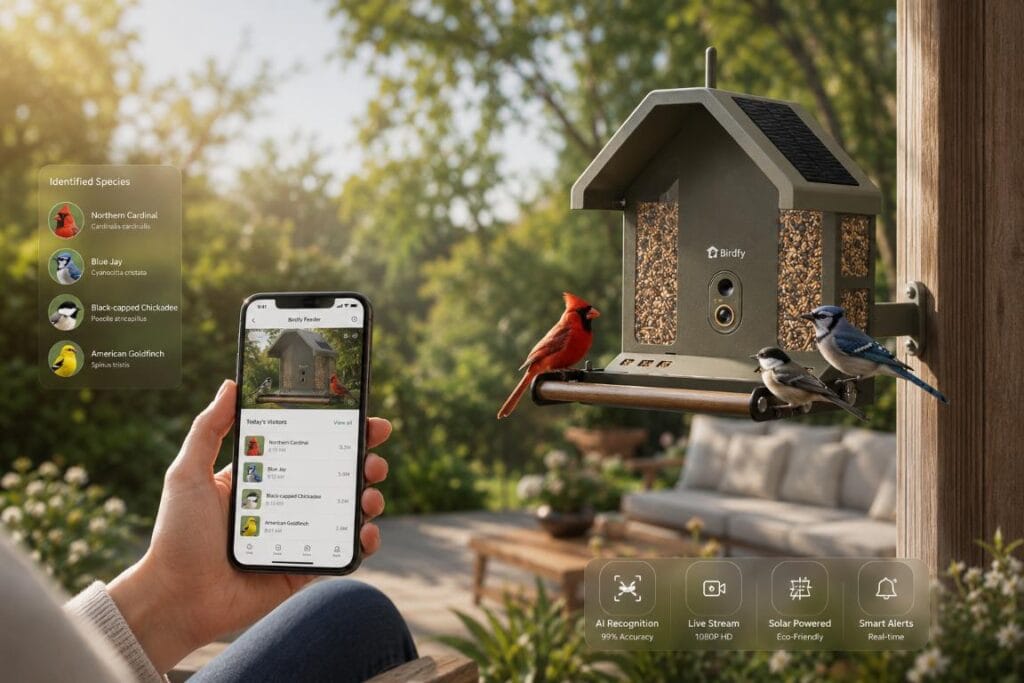
At the center of this movement is a new generation of AI-powered smart bird feeders that make birdwatching surprisingly easy. Users no longer need to wait hours outside, hoping to catch a glimpse of something interesting, but will now receive real-time alerts on their phones, with the ability to watch birds up close via live stream, and automatically identify many common species with the help of AI.
For beginners, this removes one of the biggest barriers to entry: not knowing where to start.
Why Backyard Bird Watching Is Booming in 2026
In 2026, backyard bird watching is on the rise, but why? In the last few years, people have been more conscious of their free time. With the fast-paced digital lifestyle, there is an increasing need for hobbies that are calming, meaningful, and restorative. Backyard bird watching seems to fit right in with that transition.
The Cornell Lab of Ornithology reports that international birding interest, along with citizen science projects involving birds, has been steadily rising. Additionally, Google Trends has revealed an increase in the search volume for phrases such as “smart bird feeder,” “bird watching at home,” and “bird identification app” since 2025 and into 2026.
Unlike many hobbies, which involve expensive equipment, travel, or specialized training, birdwatching is accessible. It can be placed in a balcony, patio, garden, or even in a small apartment window. The trend is particularly attractive in this day and age because of the current technology that has modernized it.
The Lifestyle Benefits of Watching Birds
Backyard bird watching has become much more than a casual pastime in 2026. For many, it has now become a natural remedy in daily life to enhance their well-being and connect with nature. One of the biggest lifestyle benefits is stress relief. Observing birds on a feeder can provide moments of relaxation and unplugging from a hectic lifestyle and screen time. Just a couple of minutes of observation can be invigorating and calming.
It has also become a family hobby due to a bonding factor between the child and the father or mother. Children love identifying birds, getting notifications, and learning about wildlife with their parents. AI bird counters, like smart bird feeders, simplify this process by recording bird visits and identifying common species.
Social media is also a reason for the trend. You can record close-up bird videos and photos for sharing online with smart feeders. People like to upload their “peaceful” wildlife videos that are realistic and interesting.
AI bird feeders are also thoughtful gifts for retirees, gardeners, and those who work remotely. Unlike regular gadgets, they offer a constant experience that varies with the season. Smart bird feeders are, as explained, a mix of technology and nature that allows normal people to take part in a relaxing and fulfilling hobby from the comfort of their homes.
How AI Smart Bird Feeders Make Birdwatching Easy for Beginners
When it comes to birdwatching, there are always challenges to overcome. Newcomers frequently had difficulty with species identification and comprehension of bird behavior, or determining when birds were visiting the area.
This is where AI Bird Feeders have made all the difference.
Modern systems like Birdfy use built-in cameras and artificial intelligence to recognize many common backyard bird species automatically. Once a bird lands on the feeder, the application can notify the user, take photos or video clips, and suggest identification.
This gives the first-time user a sense of involvement and achievement.
Users do not need to look through bird books or on the internet for answers to the birds’ names and habits, but can learn the names and habits of birds visiting their homes in a matter of seconds. With time, individuals start to learn to identify species independently.
Birdwatching and the Rise of “Slow Living”
The growing popularity of birdwatching is also part of a larger cultural trend toward more relaxed, mindful living.
Hobbies that promote presence, patience, and real-world experiences are valued. Those are all the values that backyard birdwatching promotes.
It’s so satisfying to see some of the migration patterns, to see familiar birds, or to see nesting patterns over time. These moments help to connect and support those who wish to feel connected to modern life.
The emotional experience is what is important, and AI smart feeders enhance that.
Instead of spending hours outdoors, users can interact with nature in very small ways throughout the day. Technology is used as a way to remind people of the natural world – rather than getting in the way of it.
Convenience and mindfulness are the balance that makes this hobby very attractive today.
Why AI Bird Feeders Make Great Gifts
One reason products like the Birdfy bird feeder have gained attention is their strong gift appeal.
These days, more people are looking for gifts that they feel are meaningful, interactive, and not disposable. AI bird feeders fall into that category, as they offer entertainment, education, and wellness.
They tend to be very popular with parents and retired individuals, as well as gardening enthusiasts and remote workers.
Unlike many tech products that become obsolete quickly, bird feeders create an ongoing experience that changes with seasons and wildlife activity. Users continue discovering new birds and behaviors over time, which keeps the hobby engaging long after the initial setup.
The emotional value is frequently the most significant. A regular feeding schedule for birds can provide a sense of comfort and a real boost to an individual’s environment and mood.
The Future of Backyard Nature Experiences
With the advancement of smart home technology, hobbies that merge the digital world with the real world will likely continue to expand.
Backyard birdwatching is no fad. It’s a sign of a desire to be calm and connected and find happiness in the mundane.
AI bird feeders eliminate the daunting aspect that previously kept people away from the hobby of birding. They allow identification, recording, and observation to be easier, bringing more people into the hobby without requiring expertise from the start.
Back in 2026, birding didn’t need to be a costly hobby or a trip to a remote area or years of study to be considered a “bird expert.” Sometimes, it’s more of a matter of peeking out the window a bit more