

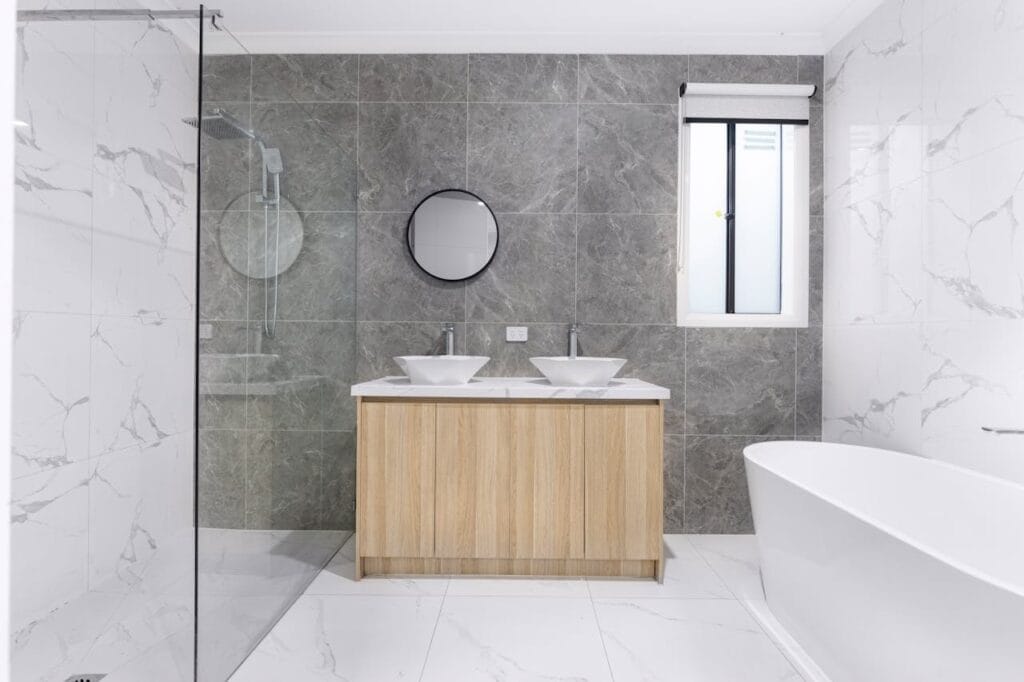

Humidity is the silent test your bathroom runs every single day. You can have a beautiful vanity with perfect paint, tight doors, and a premium countertop and still end up with hairline cracks at seams, swollen edges near the sink, or doors that slowly stop lining up. Most of those issues don’t happen because the vanity was “bad.” They happen because bathrooms are a cycle of steam, heat, cooling, and drying – and wood-based materials react to that cycle.
If you’ve been shopping for bathroom vanity and you’re worried about warping, gaps, or paint cracking, you’re asking the right question. The best-looking vanity on day one is not always the best-looking vanity on year three. This playbook focuses on what actually prevents the common failures: choosing the right finish strategy, controlling humidity with ventilation, installing the cabinet correctly, and protecting the wet zones that cause most damage.
Moisture vs solid wood: why paint cracks and seams open
Wood is alive in the sense that it moves. It absorbs moisture from the air and releases it as the room dries out. In a bathroom, humidity can spike dramatically during a shower and then drop again when the fan runs and the door opens. That repeated expansion and contraction is what creates stress.
Where does that stress show up? Almost always at joints and seams. A painted vanity is especially sensitive because paint is a film. When the wood beneath it moves, the paint can’t stretch forever. Over time you may see hairline cracks at door frame corners, faint seam lines that weren’t visible before, or tiny gaps where two pieces meet.
This is one reason some high-quality painted cabinet doors use a wood frame with a more stable center panel rather than a fully solid wood slab. A stable panel reduces seasonal movement, which reduces paint stress. But even with good construction, bathrooms can still overwhelm a finish if humidity is uncontrolled.
Swollen edges and soft corners are a different kind of problem. They usually happen when moisture reaches the substrate directly, often through a damaged edge, a tiny chip in the finish, or a seam that wasn’t sealed well. Once water gets into the edge of MDF or particleboard, swelling can be fast and permanent. Plywood holds up better than MDF in many cases, but unsealed plywood edges can still delaminate if they get repeated exposure.
The big takeaway: there are two enemies. Airborne humidity causes movement that creates cracks and gaps. Liquid water causes swelling and delamination when it reaches the core. Your prevention plan needs to address both.
Coatings and sealing: what actually protects, and what doesn’t
A vanity “finish” is not just paint color. It’s a protective system. In bathrooms, that protective system matters as much as the base material.
What actually helps is a finish that forms a durable barrier and is applied consistently, especially at edges and seams. The most vulnerable points are not the big flat panels. The weak spots are corners, bottom edges of doors, the underside of toe kicks, and the sink-area seams where splashes happen daily.
Sealing matters in places you don’t normally see. The underside of the cabinet near the sink cutout, the inside edges around plumbing openings, and the bottom panel under the sink all need protection. If those areas are raw or thinly coated, moisture has an easy entry point.
What doesn’t help as much as people think is relying on caulk to compensate for poor sealing. Caulk is useful, but it’s not a magic waterproofing layer. Caulk can shrink, separate, or mildew. If the cabinet edges aren’t sealed properly, caulk becomes a temporary patch. The better approach is a sealed substrate plus strategic caulk where water can sit.
Another myth is that “water-resistant” automatically means “waterproof.” Many finishes are water resistant to splashes and wiping, not to standing water or constant steam. If water is left to pool around the sink, or wet towels are draped against cabinet fronts, even good finishes can fail over time.
If you want a simple rule: the best finish is the one that protects edges and seams, not the one that looks the hardest on a showroom floor.
Ventilation and heat: what accelerates problems fast
Ventilation is the biggest lever you control. Many vanity issues are less about the cabinet and more about the bathroom behaving like a steam room.
If the mirror fogs heavily and stays fogged long after the shower, that is a sign the room is staying humid. That persistent moisture keeps wood and wood-based materials expanded longer, and it pushes water vapor into seams and joints. Over time, that cycle drives movement, cracking, and finish fatigue.
Heat makes it worse. Bathrooms often have warm lights, heated floors, or heat vents. Heat can soften some adhesives and accelerate certain finish changes. If your vanity is near a heat register, you can also get uneven drying: one side cycles faster than the other, which increases stress and can lead to subtle twisting.
A common real-life scenario is the “fan that runs but doesn’t win.” Many fans are underpowered or underused. If the fan runs for five minutes, but the bathroom stays steamy for thirty, the vanity has still taken the humidity hit. Running the fan longer is one of the easiest longevity upgrades you can make, even without changing the fan itself.
Also, watch for small habits that keep moisture high: leaving the shower door closed, keeping bathroom doors shut after showers, hanging wet towels directly on vanity handles, or letting bath mats stay damp near the toe-kick. These are small things, but they create constant moisture exposure at the most vulnerable areas.
Installation: how leveling, wall gaps, and wet-zone protection prevent damage
Even a great vanity can fail early if it is installed poorly. Bathrooms demand precision because water always finds the weakest point.
Leveling is not just about making drawers slide nicely. A vanity that is out of level can create subtle twisting in the cabinet box. That can cause doors to sit unevenly, seams to open, and stress to concentrate at corners. Over time, humidity cycles amplify that stress.
Wall contact is another underrated factor. Many walls aren’t perfectly straight. If the vanity is forced tight against an out-of-square wall without proper scribing or spacing, the cabinet can be under constant pressure. That pressure can show up as gaps opening on one side and tightness on the other. It also increases the chance that caulk lines crack, which lets water creep behind the cabinet.
Gaps are not always bad. A controlled, intentional gap that is sealed properly can be safer than a cabinet crushed into an uneven wall. The goal is to avoid creating tension points while still protecting the edges from splashes.
Wet-zone protection is where the biggest wins are. The sink area should be treated like a splash zone, not like a dry countertop. If your faucet throws water outward or kids splash aggressively, you want the vanity edges protected. That can include a slightly more forgiving countertop overhang, careful sealing at the backsplash line, and making sure the sink and faucet choice doesn’t create constant pooling.
Under-sink protection matters too. Small leaks happen. Condensation on cold pipes happens. A cabinet bottom that is protected and easy to wipe down can prevent a minor issue from turning into a full replacement.
The first 30 days: a mini check that prevents long-term regret
Most people install a vanity and move on. But the first month is your chance to catch the issues that cause long-term damage: small leaks, poor ventilation habits, and unsealed edges that were missed.
Here is a simple launch checklist.
- Check all plumbing connections after the first week and again after the first month, including the P-trap, supply lines, and shutoff valves
- Look inside the cabinet for moisture signs after showers for a few days, especially if the room stays steamy
- Confirm the fan can clear fog within a reasonable time; if it can’t, run it longer and consider improving airflow habits
- Inspect vulnerable edges near the sink and along the cabinet bottom for any raw spots, chips, or thin finish areas and seal them early
- Watch how water behaves at the sink: if splashes consistently hit the same cabinet edge, adjust habits, add a small splash guard, or change faucet aeration if needed
- Keep the cabinet bottom dry and organized so you can spot leaks immediately instead of discovering them months later
- Avoid harsh cleaners during the first month; let finishes cure fully and use mild cleaning only
- If doors or drawers shift slightly in the first weeks, adjust hinges and slides sooner rather than letting stress build
The takeaway
Preventing warping, cracks, and swollen edges is less about finding a mythical “perfect” material and more about controlling the environment and the weak points. Humidity cycles make wood move, which stresses seams and paint. Liquid water attacks edges and cores when sealing fails. Good finishes help, but ventilation and installation quality often decide whether a vanity stays tight and clean-looking over time.