



When choosing a computer monitor, so many decisions are made for you that it will leave you immobilized. You may have heard or read about OLED monitors, LED monitors, and LCD monitors, but what’s this? To the point, how are they different from each other?
You’ll get why OLED’s a big deal, why it’s a flagship product, and how it compares to old-school display technology. We’ll decode marketplace speak such as OLED 120Hz monitor and foldable OLED display so that you’ll know how the technology applies to current devices.

What is an OLED Monitor?
OLED stands for Organic Light-Emitting Diode. OLED displays differ from regular displays in such a way that they produce light due to special molecules whenever a current passes through them. Pixels in an OLED display actually act like emitters because they produce light without any use of a backlight.
That is as opposed to LCD or LED screens, which have a separate backlight to shine through liquid crystals or diodes to shine on the screen. Essential characteristics of OLED displays:
- Self-emitting pixels to produce truer blacks and improved contrast.
- Slim and thin appearance since no backlighting is used.
- Better wide viewing angle than LCD/LED monitors.
- Lightning-fast response rates make these mice perfect for gamers.
Because of these features, these OLED monitors continue to be one of the finest technologies to use by experts, gamers, and any other group that requires brilliant graphics.
How LCD Screens Work
LCD refers to Liquid Crystal Display. It was present in past decades and continues to be used in recent times. An LCD monitor consists of liquid crystals, which rotate anticlockwise and clockwise and alter direction to emit or receive light. But since such crystals aren’t light producers per se, LCD monitors will need a supporting system of backlighting, mostly made up of LED lights in the background.
One thing LCD monitors can’t do is create genuine blacks. Even if a crystal is a light-absorbing material, some light will be present. That reduces the level of contrast, especially in evening scenes.
But LCD monitors are inexpensive, power-efficient, and reliable, and thus they continue to dominate inexpensive monitors and televisions.
How LED Displays Fit In
If individuals refer to an “LED display,” they will primarily be describing an LCD that is backlighted with LEDs. While older displays incorporate typical cold cathode fluorescent lamps (CCFL) within backlights, LED displays incorporate LEDs (light-emitting diodes).
They are thus thinner, lighter, and power-efficient compared to older LCD monitors. They are still, though, unlike LCDs, dependent on backlighting and will thus not reach OLED’s contrast ratios.
Then, to prevent confusion:
- LCD is a liquid crystal technology that is based on backlights.
- LED stands for LCD LED backlighting.
- OLED refers to a completely new technology in which pixels emit their own light.
OLED vs. LED vs. LCD – Key Differences
Let’s simplify comparisons between these technologies a bit by pointing out some key differences.
Black Levels and Contrast
- OLED: Actual blacks because pixels completely turn off.
- Contrast is unlimited.
- LED/LCD: Blacks become darker gray due to leakage of backlight.
Colour Accuracy
- OLED: More vivid colors with even more natural colors.
- LED/LCD: Fairly good color quality, but not very deep.
Viewing Angles
- OLED: Excellent, the color does not change regardless of the angle.
- LED/LCD: Colors can change, and intensity can change while watching off-angle.
Response Time
- OLED: Fast response time, great for gamers and high-speed displays.
- LED/LCD: Longer response, creating motion blur.
Design and Flexibility
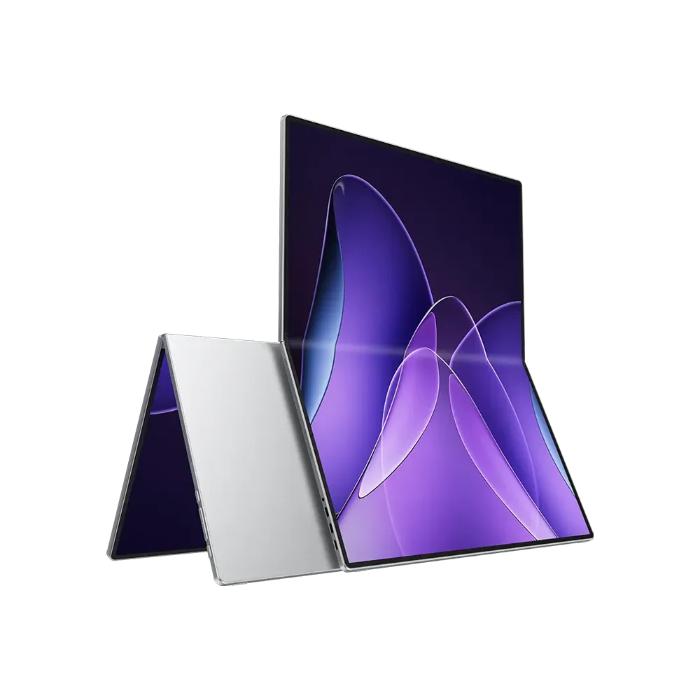
- OLED: It can be made ultra-thin and even flexible, thereby creating products such as foldable OLED display.
- LED/LCD: Rigid designs, not flexible.
Why choose an OLED Monitor?
If considering going out to a shop to purchase a new monitor, then these can be reasons why OLED might be a consideration:
- Unparalleled Picture Quality – With colors and deeper blacks, OLED monitors revive cinematic moments, gaming, and creative work in eye-opening ways.
- Gaming Performance – A smooth gaming performance is provided by an OLED 120Hz gaming monitor with extremely fast response times.
- Eye Comfort – It will be gentle on the eyes since OLED can change brightness on a per-pixel basis and will be very comfortable in dim rooms.
- New Aesthetics – Modern, slender, and futuristic designs create OLED monitors to be a centerpiece on any computer desk.
Coming at a higher cost compared to both LCD and LED monitors as a natural alternative, OLED monitors are subject to burn-in, where static left on a screen fixes pictures permanently on the screen. New releases contain technology meant to help mitigate this issue.
Flexible OLED Panels – Next-Generation Display Screens
What is perhaps most compelling about OLED technology is that it can be made flexible. Since OLEDs require no rigid backlight component, OLEDs can be fabricated on a flexible substrate. This has made possible innovations like a smartphone that can be folded or a TV screen that can be rolled, and a curved screen.
A rollable or bendable, or folding OLED display that will not shatter is a feat that LCD and LED technology were never capable of. It makes it possible that we can have powerful but easily portable gadgets someday.
There is a chance we might already have a folding computer or two OLED displays or monitors that can be rolled out like a poster. That is how far OLED technology is extending beyond LCD monitors.
Gaming on an OLED 120Hz Monitor
Gamers have been some of the largest fans out there for OLED technology. A 120Hz OLED monitor is a mind-blowing product due to two reasons:
- High Refresh Rate – 120Hz implies that the display refreshes 120 times every second and has smooth motion.
- Low Response Time – It takes OLED pixels microseconds to change colors, beating out blur and lag.
Since both these aspects function side by side, gaming is smooth, interactive, and highly responsive. If fast shooters, racing titles, or role-playing RPGs are your preference, then an OLED monitor will bring your gaming station to a higher dimension.
Practical Uses of OLED Monitor
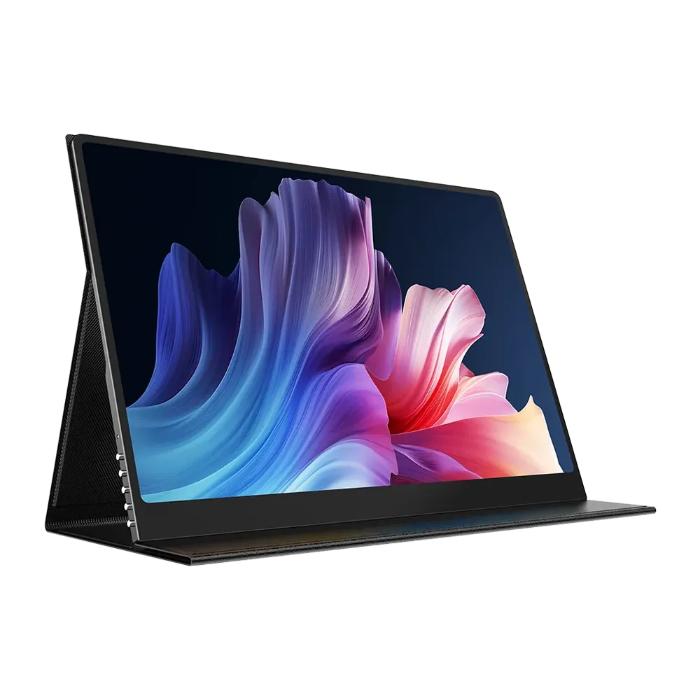
Other than gaming, “OLED monitors” can easily be utilized in other applications:
- Graphic Design & Video Editing – Precise colors enable professionals to carry out innovative work.
- Office work_ Writing is lucid and brief and minimizes eye strain.
- Movies & Entertainment – It is absolutely not possible to substitute cinema watching with LCD or LED displays.
- Portable Devices – Even folding telephones now incorporate OLED screens to maximize graphics. Disadvantages of OLED Monitor
Disadvantages of OLED Monitors
OLED is a wonderful technology, but it is not perfect, with certain drawbacks:
- High Prices-OLED monitors are the higher-priced cousin of LED and LCD models.
- Burn-in-Static images, such as taskbars or game HUDs, can create lasting marks if displayed for an extended time.
- Brightness Level-These OLED monitors do not get bright enough in some cases compared to LED backlit displays, especially in very bright environments.
- Availability-OLED monitors are still one of the least common ones, and so compared to LED or LCD monitors, the choice is limited.
However, with each passing year, OLED technology has been improving to make it more reliable and user-friendly.
Conclusion
OLED and monitors are next-generation technologies for display. Unlike LED and LCD, these don’t require a backlight; instead, each pixel generates light, providing higher contrast, deeper color, and extensive freedom in design.
If you are after the best imaginable experience for gaming, designing, or simply watching movies, the OLED monitor would definitely be worth the investment. Innovations such as the foldable OLED display and new lines of OLED 120Hz monitors for gaming are a clear indication that OLED is the future of display technology.