


For decades, design was demarcated by edges — posters had frames, screens had aspect ratios, and creativity had to be contained within rectangles. But the digital renaissance has started to push those limits—literally. With the aid of tools such as Dreamina’s AI photo generator, brands are no longer producing works of art; they’re producing worlds. Immersive visuals that don’t end at the edge but bleed indefinitely into digital space, changing as you move, swipe, or even breathe close to them.
This is the wonder of endless arrays of canvases: the ability to design without limits. The frame no longer restricts imagination—it frees it.
When frames disappear, worlds begin
Designers used to think in defined measurements—A4, 1080×1080, 16:9. Today, the most engaging images no longer think in proportions. The beauty of adaptive narrative is that every image can expand, scroll, or move in relation to where you, the viewer, are looking.
Imagine this: a perfume commercial with mist that doesn’t disappear; it fills space indefinitely, like air on your screen. Or a tourism campaign that no matter how far you zoom in, the horizon always keeps going.
These unfurling worlds provoke exploration, as opposed to staring. The image doesn’t conclude; it sets you up to see where it concludes next. The image doesn’t finish; it invites you to discover where it finishes next.
The endless scroll’s charm
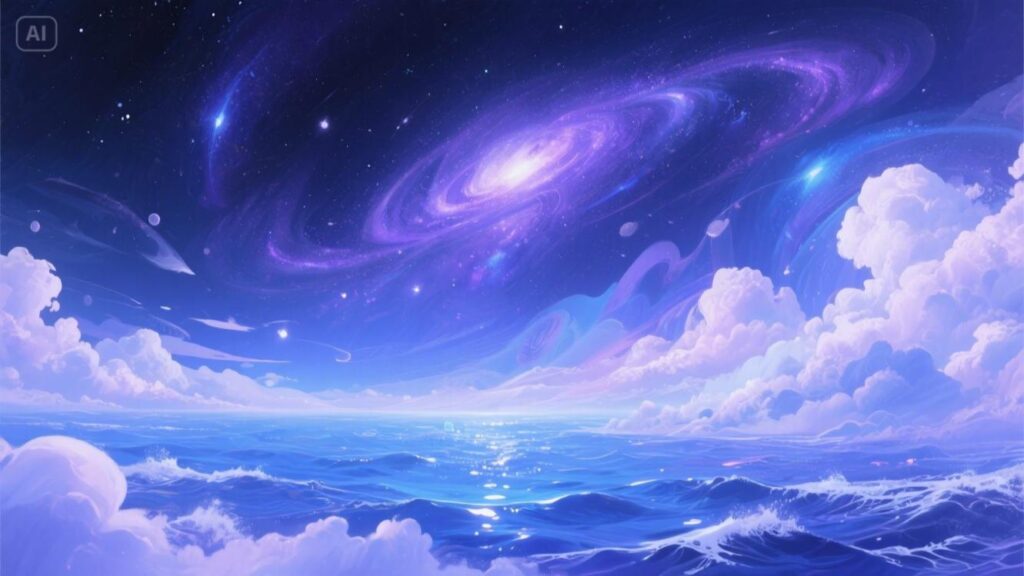
Infinity is a romantic notion — galaxies and oceans and dreams. Bringing that to digital branding is what creates emotional engagement. Audiences don’t merely view an image; they navigate through it.
Markets employing infinite canvases are drawing on three key emotional drivers:
- Exploration: Curiosity drives engagement. People naturally want to “see what’s next.”
- Freedom: Unlimited imagery represents creativity and potential.
- Calmness: Slow motion, sweeping pans, and seamless flow bring visual tranquility — such as observing waves roll on and on.
Infinite designs make one feel small but together — a feeling both humble and trance-inducing.
Unframed design is the new storytelling
Old campaigns tell stories in sequence: image one, then two, then three. But when the canvas has no edge, the story is spatial rather than linear.
Designers create experiences such as worlds instead of slides. Each element of the image relates — not in direction, but in feeling.
Examples:
- A fashion company could create an endless terrain of fabrics, textures, and seasons.
- A record label could make album cover art extend endlessly in time with beats.
- A technology company could imagine innovation as a bright line extending forever forward.
Every iteration of the ad exists somewhere on the same boundless surface — a digital mural with no bounds.
Fluid identities and the dynamic logo
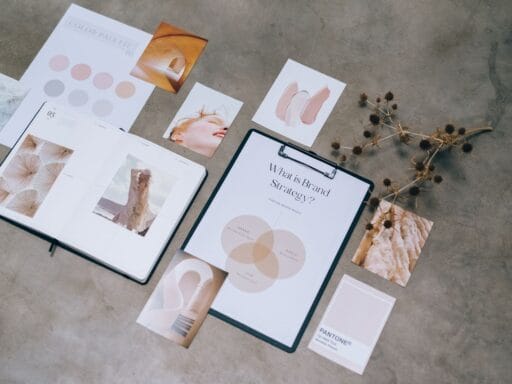
This boundless philosophy isn’t just impacting imagery — it’s redefining how brands identify themselves. A logo with a single shape now has an infinite number of them.
Here’s where the AI logo generator comes in. Designers employ it to create fluid marks that shift based on context — changing color in sunlight, texture in sound, or even form based on movement.
A brand’s logo may look soft and brushy on one surface, cut-paper-futuristic on another, and still be unmistakably itself. The payoff? A living identity that feels responsive — breathing, adaptive, and emotional.
Infinite canvases require infinite flexibility, and this new generation of logo design is that perfectly.

Hyper-real textures within the limitless space
When visuals grow, so does the demand for sensory realism. Audiences want to experience what they are seeing. Endless canvases are now being constructed based on simulated physics and depth — drops that fall, clothes that wave, light that warps as if from life.
Designers are combining these feelings with cinematic gradients and dynamic blur. Each element whispers motion and mood, making the ad act like an environment and not an illustration.
Others term it digital tactility — graphics so tactile that your eyes perceive them as physical sensations.
Where posters never end
Let’s discuss the magic meeting of art and marketing: the AI poster generator. It’s becoming the gateway to these never-ending universes.
Picture creating a campaign that begins as a poster but shifts as you zoom in — unfolding micro-scenes hidden in plain sight, understated animations, or concealed symbols dispersed throughout the frame. It’s like finding a concealed tale in pixels.
With unlimited canvases, a poster is no longer merely an announcement — it’s a digital relic, a scrollable universe. Each visitor travels a unique journey through it. Some take in the texture, some the light, some the minute details you’ve left like breadcrumbs.
It’s art that’s meant to be experienced, not merely looked at.

Infinity as a brand emotion
Beyond graphics, infinity speaks to continuity — the concept that a brand isn’t fixed but is constantly developing. This speaks volumes to younger generations, who believe in brands that advance alongside them.
Infinite canvases can be expressed visually:
- Sustainability via endless organic patterns.
- Innovation via developing geometric expansions.
- Community via infinite interlocking dots or forms.
It’s not simply a style; it’s narrative through boundlessness.

The dreamina philosophy of endless creation
Dreamina knows that creativity cannot be confined to a box (or frame). Its tools inspire artists and brands to expand imagination to the infinite — blending photography, illustration, and emotion in perfect harmony.
From its AI image generator to its intelligent adaptive editing suite, Dreamina advocates the sort of creativity that doesn’t end with the canvas. Whether you’re creating a growing skyline, a scrolling galaxy, or a visual poem that unrolls as you move — Dreamina lets you create not only images, but entire visual worlds.
Because in the era of infinite canvases, design is no longer about making one thing look beautiful.
It’s about bringing the entire world around it to life.