


If you’ve been producing video content for any length of time, you already know the bottleneck isn’t usually the idea — it’s the production. Shooting is one thing. Getting that footage to look the way you actually want it to look is another challenge entirely. That’s where video-to-video AI is starting to make a real difference.
What Video to Video Actually Means?
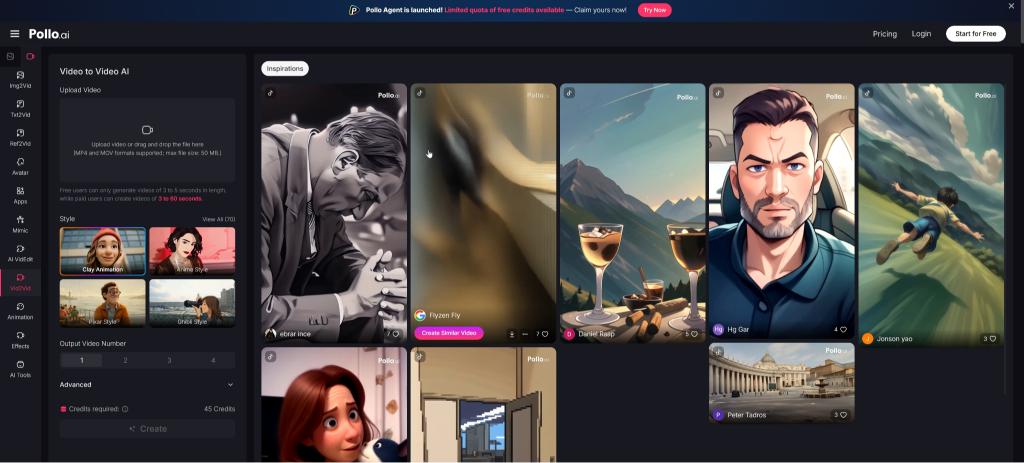
Unlike text-to-video tools that generate clips from scratch, video-to-video AI takes your existing footage and transforms it. The structure, motion, and timing of your original clip stay intact — what changes is the visual treatment. Think of it as a style transfer applied to moving images, guided by prompts or parameters you define.
For working creators, this is a more practical proposition than pure generation. You already have footage. The question is what you can do with it.
Pollo AI has built a video to video tool specifically around this workflow, making the process accessible without requiring any background in motion graphics or post-production software.
Why Creators Are Actually Using It?
The use cases that keep coming up aren’t theoretical — they’re the kinds of problems creators run into on a regular basis.
The first is visual consistency. If you’re producing content across multiple formats or at high volume, keeping a unified aesthetic across everything is genuinely difficult. AI transformation tools can apply a defined visual style across different clips without manual color grading on every single one.
The second is repurposing. Most creators with any history of content production are sitting on footage that no longer matches their current brand direction. Video-to-video tools make it possible to refresh that material without a full reshoot — which is essentially free content if you already have the raw files.
The third is low-cost experimentation. Testing a new visual direction used to mean committing hours of editing time before knowing if it even worked. With AI tools, you can run a style test on a short clip in minutes and make an informed decision before investing further.
Don’t Overlook the End of Your Video
Here’s something that often gets less attention than it deserves: how your video ends matters as much as how it begins.
Viewers who make it to the final stretch of your video are your most engaged audience. They’re the ones most likely to subscribe, click through to another video, or act on whatever you’re asking them to do. A weak or visually inconsistent outro undermines that moment — and a well-designed one can meaningfully move the needle on your retention and click-through numbers.
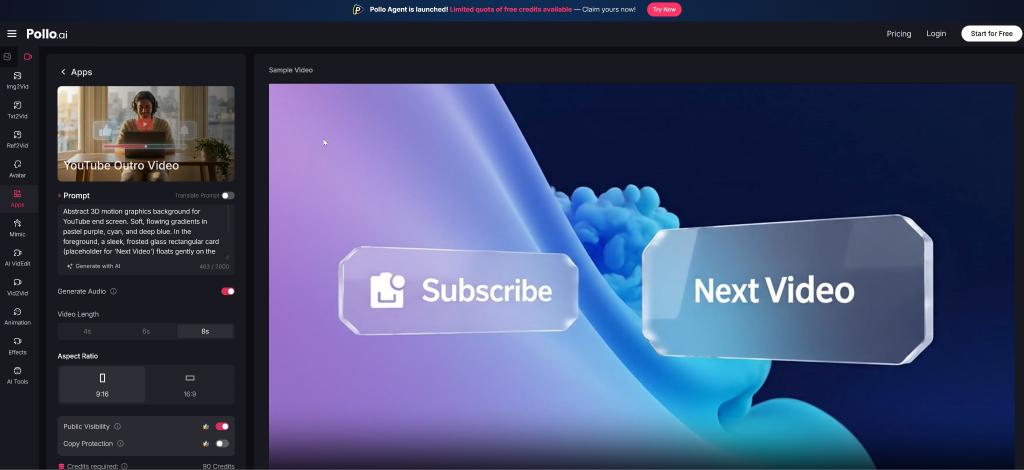
Using a dedicated YouTube outro maker from Pollo AI lets you build a polished, on-brand closing segment that you can reuse and adapt across uploads. Paired with video-to-video transformation for your main content, you get a workflow where the aesthetic holds together from the opening frame all the way to the final end card — which is harder to achieve than it sounds when you’re working at volume.
A Few Honest Limitations
No tool is a fix for everything, and it’s worth being clear-eyed about where video-to-video AI still has rough edges.
Motion consistency is the most common issue. When source footage has a lot of fast movement or camera shake, maintaining a stable transformation across every frame becomes harder, and you can end up with flickering or visual artifacts. Controlled, well-lit footage consistently produces better results, so the quality of your input still matters more than most people expect.
There’s also a prompting curve. Like most generative AI tools, output quality is closely tied to how well you describe what you want. Vague style prompts produce variable results. Specific ones — referencing lighting quality, color palette, or mood — give the model more to work with and tend to produce more predictable output. Most creators find this curve flattens out quickly after a few test runs.
The Bigger Picture
The gap between raw footage and polished, stylized content is narrowing. What used to require specialized skills or expensive software is becoming accessible to anyone willing to spend time learning the tools.
The creators who will benefit most are the ones building that fluency now — not waiting until the tools are perfect, but developing the workflow instincts that will compound in value as the technology keeps improving. Video-to-video AI is practical enough today to be worth integrating into your process. And the earlier you start, the further ahead you’ll be when the next generation of tools arrives.